
The strongest shield Europe can build is not a wall against the outside, but stronger democracy on the inside and to counter internal threats.
Inaki Irazabalbeitia, Coppieters, calls for european policies to increase civic space and democracy at Commitee of the Region event.
Coppieters Foundation took part in Committee of the Regions’ Commission for Citizenship, Governance, Institutional and External Affairs (CIVEX) event to debate democratic institutions, freedoms and the way forward for Europe.
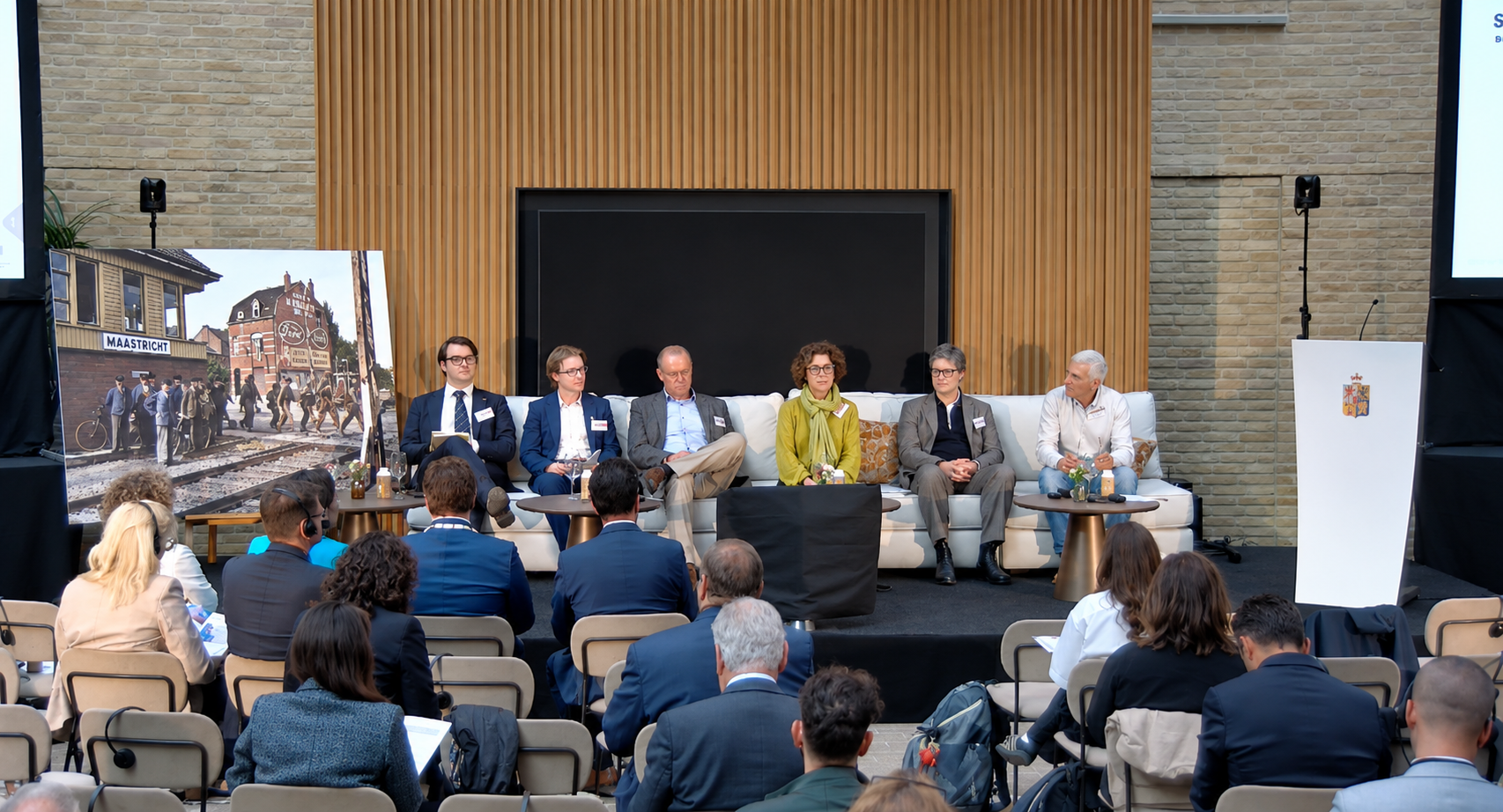
On 10 September 2026, Eijsden was home to the event “Celebrating 80 Years of Freedom: Democratic Resilience for the Way Ahead” an event organised by the Committe of the Regions’ Commission for Citizenship, Governance, Institutional and External Affairs (CIVEX).
Inaki Irazabalbeitia, former MEP and board member of Coppieters Foundation, took up the floor to advocate for more democracy and a more inclusive governance recognising of diversity.
He defended the importance of European values of freedom, cooperation and solidarity “We are Pro European: European integration remains the best available framework for peace, rights and shared prosperity on the continent. Maastricht itself, where we are today and where the 1992 Treaty on the European Union was signed is proof of European cooperation can build, with consensus on shared interests. But believing in Europe and European values and defending them blindly are not the same thing. Europe is build on facing difficulties and addressing them. Having the capacity to critically analyze our reality, point out at the shortcomings of our institutions and propose solutions is an exercise of democracy and responsibility.
Democratic resilience cannot be built only from the central, state, or EU-institutional level – it must include the perspective of the peoples of Europe, the minority communities and regional governments. More legitimacy for the European project stems from a better inclusion of the groups that have structurally had weaker capacity to influence decision making.”
When addressing the current challenges Europe faces in geopolitical terms he argued that trust is Democracy and European Institutions has been sliding as we face an increasingly more transactional international relations and a weakening of some basic democratic principles like multilateralism and rule of law and advocate to focus the debate on the actions we can take to reinforce our democracies
“For us the most critical point to address is not what third countries or super powers do to compromise our future but what we, Europeans, can do to improve our institutions.
Institutional distrust deepens when citizens don’t feel heard or represented, when peoples feel governed by a far away administration that doesn’t reflect their own interest or recognize their priorities, identity or language.
This is a problem that disproportionately impacts peoples without direct representation in and recognition by the Institutions, including local and regional governments.”
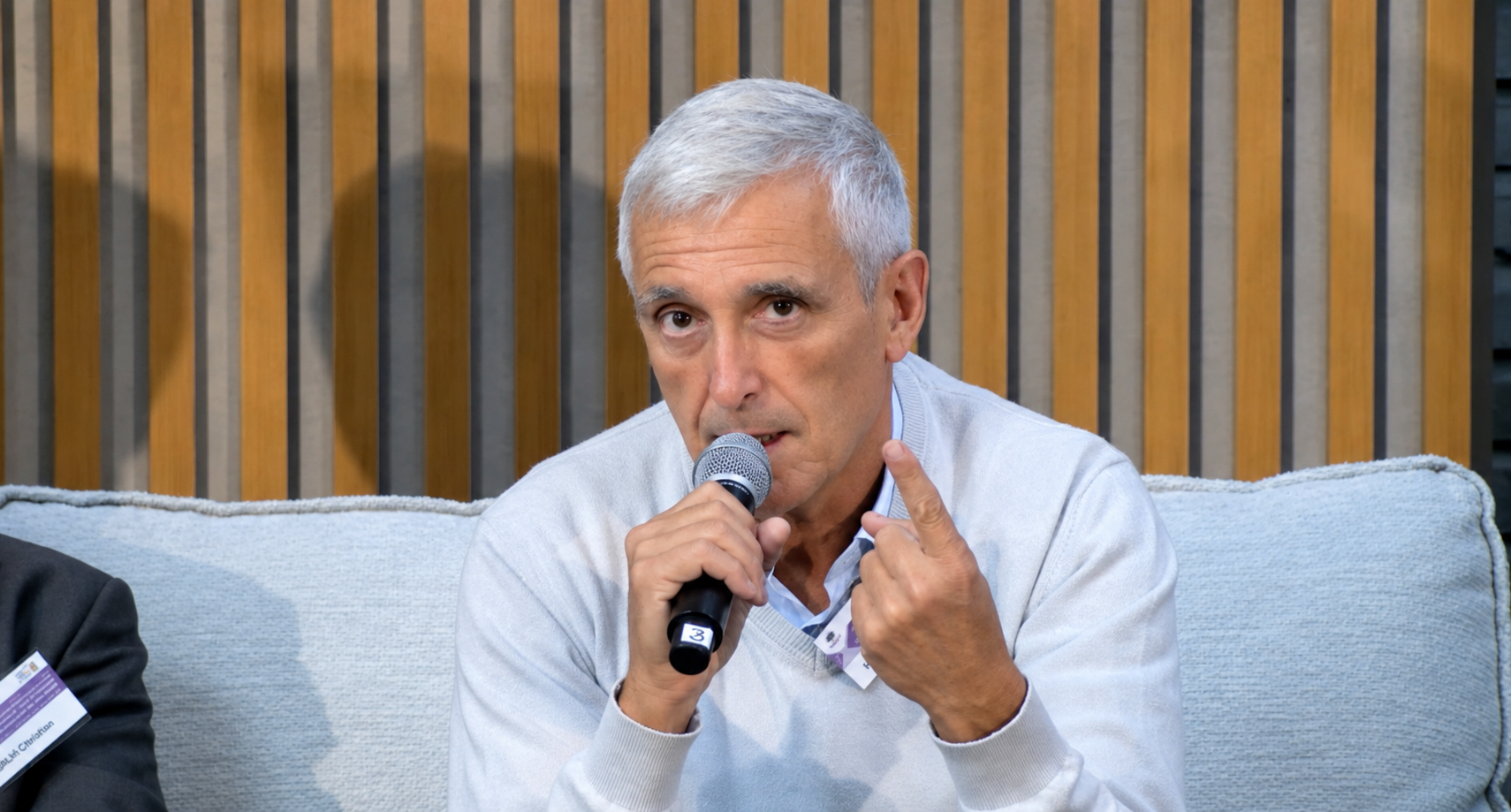
he added “We need to bridge the gap between citizens and institutions, all citizens, including those leaving in remote or peripheric areas, including those leaving in islands, including those belonging to minorities or nations without the direct access central governments enjoy.
Cities and regions, including sub-state and supra-state groupings within the EU, are structurally closest to citizens and best placed to rebuild trust through visible, responsive democratic practice – this is where resilience is actually made.
Defending democracy cannot mean defending the status quo, we have to go beyond:
- More democracy – Stronger application of the subsidiarity principle – decisions taken at the level closest to citizens
- More civic space and more dialogue, genuine democratic mechanisms for citizen participation, reinforcing the role of the European Parliament and of course the Committee of the Regions and the Social and economic council. Not one-off consultations: permanent, structured spaces where input an influence the outcome and that corrects for the overwhelming influence policy of corporations.
- Real representation for the level of governance nearest to citizens – cities, regions, and peoples – not only member states and the EU institutions.
- Better funding for human rights and civil society organisations. This is the oil in the engine of democracy and participation.
- Freedom of communication, expression and the press: concrete protection for activists, politicians and journalists. Also, for minority languages.
- Self-determination should be treated as a core principle of the Democracy Shield and as legitimate democratic expression, allowing the peoples the capacity to have agency over their own future reinforces institutions and their sense of belonging, in turn reinforcing the European project.
- Election integrity and citizen-engagement measures need to be built for multi-level Europe – state, regional, and local – each requiring its own architecture, not a one-size-fits-all approach. These policies have to respect internal distribution of competences in member states, so that European measures are not seen as a de facto way to bring devolved competences back to the states. This needs to be in the design of every policy, including democracy and participation policies and be accompanied by funding and decision-making powers for regions.”
Irazabalbeitia concluded his speech with a strong call to action and to engage collectively in the design of new policies to strenghten Europan Institutions
“Democratic resilience in Europe relies on bridging the gap between citizens and institutions.
The strongest shield Europe can build is not a wall against the outside, but stronger democracy on the inside. Coppieters Foundation is ready to help build it.”
. . .
Coppieters foundation is financially supported by the European Parliament. The European Parliament is not liable for the content of the event nor for the opinions of the speakers.
. . .
Thank you for following our activities over the past few years. We hope our updates have been useful to you. We would like to keep informing you about upcoming events, new publications, summer schools, and job vacancies. Subscribe to our newsletter to hear from us in your inbox.